
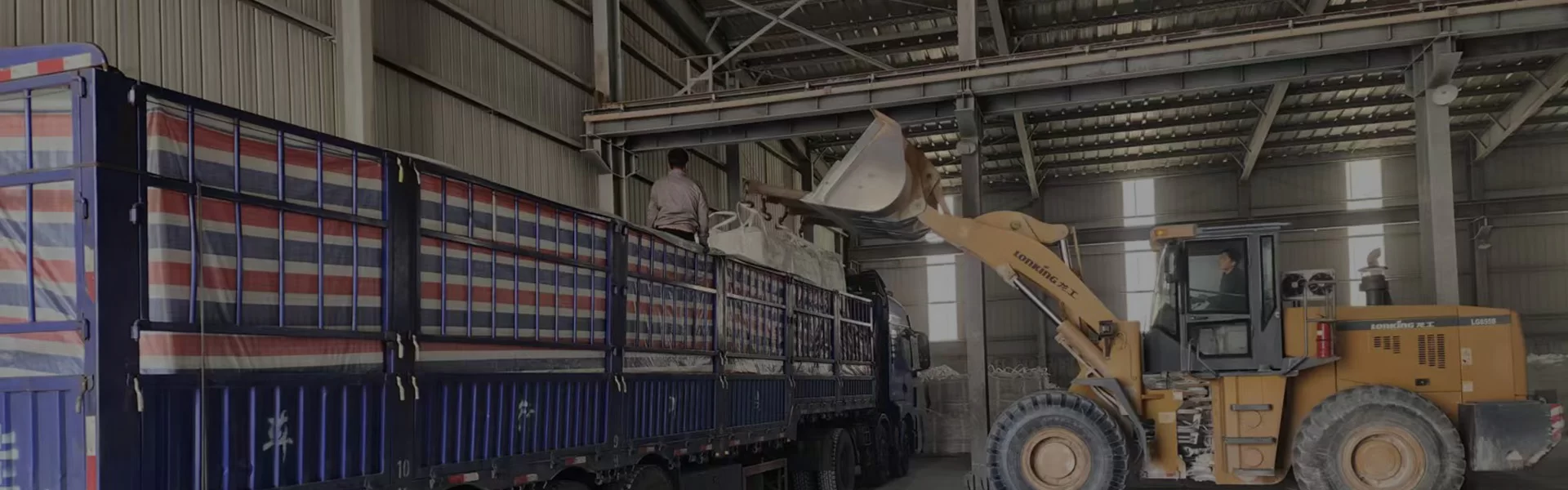
High Purity China Factory price barite powder and Fillers
Procuring high-performance mineral fillers requires a precise balance between chemical purity and cost-efficiency. For manufacturers in the polymer and construction sectors, utilizing a premium inorganic filler engineered from natural calcite and marble can significantly optimize production overheads without sacrificing material integrity. Our heavy calcium carbonate provides a sophisticated solution for those seeking a high-brightness, thermally stable powder that enhances the mechanical properties of PVC, PE, and PP resins.
By focusing on ultra-pure calcite sources, this material achieves exceptional dispersibility and low oil absorption, which are critical for maintaining flow characteristics during high-speed extrusion or injection molding. Whether you are aiming to increase the rigidity of industrial piping or reduce the reliance on expensive pigments through superior whiteness, understanding the technical synergy between filler loading and resin performance is the key to maximizing your return on investment in raw material procurement.

Technical Composition and Thermal Stability of Heavy Calcium Carbonate
At its core, our premium heavy calcium carbonate is an inorganic filler derived from the mechanical grinding of ultra-pure natural calcite and limestone. Unlike chemically precipitated alternatives, the mechanical process preserves a high density and a specific particle morphology that is ideal for heavy-duty industrial applications. With a calcium content reaching 98.6%, the material exhibits remarkable chemical inertness, ensuring that it does not react adversely with polymer matrices during the compounding process.
One of the most critical technical advantages is its thermal stability, which remains consistent up to 400°C. This makes it an indispensable component for fire-resistant building materials, such as ceilings and specialized insulation panels, where structural integrity must be maintained under extreme heat. The fine particle distribution, available from 100 to 5000 mesh, allows engineers to tailor the filler's impact on the final product's surface finish and internal density.
- High Purity: 98.6% Calcium content ensuring minimal impurities.
- Thermal Endurance: Stable performance up to 400°C for heat-sensitive applications.
- Chemical Nature: Non-toxic and odorless, adhering to strict safety standards.
- Optical Quality: High brightness (94.2% whiteness) reducing TiO2 dependency.

Optimizing Polymer Performance in PVC, PE, and PP Production
In the production of PVC pipes, profiles, and sheets, the integration of heavy calcium carbonate acts as a functional extender. By replacing a portion of the expensive resin, manufacturers can achieve a significant reduction in raw material costs. However, the primary value lies in the enhancement of rigidity and dimensional stability. The filler's ability to reinforce the polymer matrix prevents warping and shrinkage during the cooling phase, ensuring that final products meet strict engineering tolerances.
For Polyethylene (PE) and Polypropylene (PP) applications, the focus shifts to processing efficiency. Our powder's low oil absorption and superior dispersibility optimize the melt flow characteristics, which allows for faster cycle times in injection molding. Furthermore, in the rubber industry, this filler is utilized to boost tensile strength and abrasion resistance in gaskets, hoses, and industrial belts, where durability under mechanical stress is paramount.
The synergy between a fine mesh size and high whiteness allows for a simplified formulation design. Instead of relying on costly white pigments, the natural brightness of the calcite provides the necessary opacity, resulting in a cleaner surface finish and a more cost-effective production line.
Industrial Application Scenarios and Material Matching
Selecting the correct grade of filler depends entirely on the end-use scenario. In the construction industry, where fire safety is the priority, the inorganic nature and thermal stability of the powder make it the first choice for fire-resistant boards. In these cases, a medium mesh size is often preferred to provide a balance between structural reinforcement and ease of mixing.
Conversely, for high-precision plastic components, a finer mesh (up to 5000 mesh) is required to avoid surface irregularities and ensure a smooth, gloss-consistent finish. The choice of particle size directly influences the "clinching point" and the overall viscosity of the melt. For rubber seals and gaskets, the emphasis is placed on the filler's ability to improve hardness and resistance to wear, which is achieved through optimized loading ratios provided by technical support teams.
Integrating this material into a production line typically follows a logic of "Performance vs. Cost." By increasing the filler loading while maintaining the mechanical properties of the resin, companies can increase their profit margins per unit without compromising the quality expected by the end customer.
Material Performance and Application Matrix
| Application Field | Key Requirement | Recommended Mesh | Primary Benefit |
|---|---|---|---|
| PVC Piping | Dimensional Stability | 200 - 1000 Mesh | Enhanced Rigidity |
| PP/PE Plastics | Melt Flow Efficiency | 1000 - 2500 Mesh | Reduced Shrinkage |
| Industrial Rubber | Abrasion Resistance | 500 - 1500 Mesh | Tensile Strength |
| Fire-Resistant Boards | Thermal Stability | 100 - 500 Mesh | Heat Resistance (400°C) |
| High-Gloss Coatings | Surface Smoothness | 2500 - 5000 Mesh | Superior Opacity |
Supply Chain Stability and Quality Assurance Standards
For large-scale industrial users, the consistency of the mineral supply is as important as the technical specifications. An integrated mining and processing approach ensures that every batch of powder maintains the same purity and particle size distribution. This stability prevents costly downtime caused by formulation failures or quality fluctuations in the final product. Strict purity testing and mesh size verification are conducted for every production lot to guarantee compliance with international standards.
Our commitment to quality is validated by a comprehensive suite of certifications. The ISO 9001 Quality Management System ensures process consistency, while EcoVadis Sustainability Certification reflects our commitment to environmentally responsible mining practices. Furthermore, REACH compliance ensures that our materials can be seamlessly exported and used within the European Union, providing a global reach for our clients.
Beyond the product itself, professional logistics and packaging are essential for bulk industrial delivery. Strategic proximity to major ports, such as Tianjin Port, allows for rapid shipping and reduced lead times, which is critical for manufacturers operating on lean inventory models. From custom grinding to technical guidance on filler loading ratios, the goal is to provide a turnkey supply solution.
Future Trends in Mineral Fillers and Procurement Strategies
The mineral filler industry is shifting toward "functionalization," where fillers are no longer seen as mere cost-reducers but as performance enhancers. We are seeing an increased demand for ultra-fine powders that can interact more intimately with nano-polymers, creating materials with unprecedented strength-to-weight ratios. As environmental regulations tighten, the move toward sustainable extraction and non-toxic, inorganic fillers is accelerating.
For procurement managers, the strategy should evolve from seeking the lowest unit price to evaluating the "Total Cost of Ownership." This includes considering how a higher-purity filler can reduce the need for expensive additives, lower the scrap rate during production, and improve the longevity of the final product. China Factory price barite powder and calcium carbonate options are increasingly evaluated on their ability to integrate into circular economy models through sustainable sourcing.
Investing in tailored particle size customization is another key trend. Instead of relying on standard grades, industry leaders are collaborating with suppliers to develop specific mesh distributions that match their unique extrusion hardware, thereby maximizing output and minimizing energy consumption during the melting phase.
Frequently Asked Questions About Industrial Calcium Carbonate
What is the main difference between Heavy and Light Calcium Carbonate?
Heavy calcium carbonate is produced through the mechanical grinding of natural calcite or marble, resulting in a higher density and a distinct particle morphology. Light calcium carbonate is chemically precipitated, typically offering smaller, more uniform particles, but lacking the density and specific mechanical reinforcement provided by the heavy variety.
How does this filler affect the whiteness of PVC products?
Due to its high natural purity and brightness (94.2%), our Heavy Calcium Carbonate improves the overall opacity and whiteness of PVC. This often allows manufacturers to reduce the amount of expensive Titanium Dioxide (TiO2) or other white pigments needed in the formulation.
Can the mesh size be customized for specific industrial needs?
Yes, we provide a wide range of standard sizes from 100 to 5000 mesh. We also accept full customization requests to ensure the powder's particle size distribution perfectly matches your specific technical requirements and machinery.
In which rubber applications is this filler most effective?
It is highly effective in the production of industrial belts, gaskets, hoses, and seals. In these applications, the filler improves abrasion resistance and tensile strength, extending the operational life of the rubber components.
Is this material safe for use in fire-resistant building materials?
Absolutely. Its high thermal stability (stable up to 400°C) and inorganic nature make it an ideal filler for fire-resistant ceilings and other safety-critical building materials where heat endurance is mandatory.
How does Heavy Calcium Carbonate reduce production costs in PP production?
It acts as a high-performance extender, replacing a significant portion of the expensive polypropylene resin. Because it maintains or even enhances the stiffness and impact resistance of the final product, the overall cost per unit is reduced without compromising quality.
Technical References and Industry Sources
- ISO International Organization for Standardization - Quality Management Systems
- European Chemicals Agency (ECHA) - REACH Compliance Guidelines
- ScienceDirect - Research on Inorganic Fillers in Polymer Composites
- USGS - Mineral Commodity Summaries for Calcite and Limestone
Ready to optimize your material costs and enhance your product performance? Contact our technical team today for custom mesh specifications and bulk pricing options tailored to your industrial requirements.
Related Industrial Mineral Insights


