
High Quality China purified Talc Powder For Plastics Supplier
Selecting the right mineral filler is critical for plastic manufacturers aiming to balance structural rigidity with cost-efficiency. Purified talc serves as a high-performance functional filler that enhances the mechanical properties of polymers, particularly in automotive and industrial components. By integrating high-purity magnesium silicate, producers can achieve significant improvements in heat resistance and dimensional stability while reducing overall material shrinkage during the molding process.
For procurement managers, the challenge lies in sourcing a material with consistent particle size distribution and low impurity levels to avoid contamination and ensure seamless blending. Shijiazhuang Fengersheng Mining leverages decades of expertise in non-metallic mineral extraction to provide specialized talc solutions that meet the stringent demands of the global plastics industry, ensuring that the final composite maintains its integrity under various thermal and physical stresses.

The Role of High-Purity Talc in Polymer Reinforcement and Material Science
Talc, a naturally occurring hydrated magnesium silicate, is prized in the plastics industry for its platy crystalline structure. When incorporated into a polymer matrix, these plate-like particles act as reinforcement, creating a composite with superior stiffness and tensile strength compared to unfilled plastics. This structural reinforcement is essential for parts that must withstand mechanical loads without warping or failing.
Beyond physical strength, the purification process is vital. Raw talc often contains iron oxides and other impurities that can cause discoloration or catalyze the degradation of the plastic during high-temperature processing. Purified talc ensures a neutral color profile and chemical stability, making it suitable for high-end aesthetic finishes and technically demanding engineering plastics. The reduction of impurities also enhances the electrical insulation properties of the resulting composite.
Key benefits include:
- Increased Flexural Modulus: Enhances the rigidity of the final product.
- Thermal Stability: Improves the heat deflection temperature (HDT).
- Dimensional Precision: Significantly reduces molding shrinkage and prevents warping.
- Cost Optimization: Acts as an effective filler to reduce the volume of expensive virgin resins.

Critical Application Scenarios in Modern Plastic Manufacturing
The application of purified talc spans several high-growth sectors, each requiring specific technical characteristics. In the automotive industry, it is extensively used in under-the-hood components, dashboards, and interior trim. The ability of talc-filled polypropylene (PP) to resist heat and maintain its shape under temperature fluctuations makes it an ideal choice for replacing heavier metal parts, thereby contributing to vehicle lightweighting and fuel efficiency.
In the consumer electronics sector, talc-filled plastics are used for housings and internal brackets. The material provides the necessary impact resistance and structural support while allowing for complex injection molding designs. Furthermore, the low shrinkage properties ensure that interlocking parts fit together with high precision, reducing the need for secondary machining operations.
Industrial applications also include:
- Packaging: Improving the barrier properties and stiffness of thin-walled containers.
- Construction: Enhancing the durability of PVC pipes and profiles.
- Appliances: Providing structural rigidity for washing machine drums and refrigerator liners.
Technical Selection Criteria for Procurement Specialists
When evaluating suppliers for China purified Talc Powder For Plastics, procurement teams should look beyond the price per ton and focus on technical consistency. Particle size distribution (PSD) is the most critical factor; too coarse a powder can lead to surface roughness and stress concentration points, while too fine a powder may increase viscosity, making the melt harder to process in the injection machine.
Another vital consideration is the aspect ratio of the talc particles. A higher aspect ratio generally leads to better reinforcement properties. Buyers should request detailed lab reports regarding the whiteness index and the percentage of iron content. High iron levels can lead to "spotting" or yellowing during the extrusion process, which is unacceptable for clear or light-colored plastic products.
Consistency between batches is where many suppliers fail. A robust quality management system, such as ISO 9001, is a baseline requirement. Furthermore, for exports to European or North American markets, REACH compliance is mandatory to ensure that the mineral does not contain hazardous substances that could migrate from the plastic into the environment or the end-user's hands.
Talc Grade Comparison for Different Plastic Applications
| Application Type | Preferred Grade | Key Requirement | Expected Outcome |
|---|---|---|---|
| Automotive Trim | Ultra-Fine Purified | Low Iron / High Whiteness | Smooth Surface Finish |
| Industrial Pipes | Standard Purified | Consistent Particle Size | High Ring Stiffness |
| Electronics Housing | High-Aspect Ratio | Dimensional Stability | Low Warpage / Precision |
| Thin-Wall Packaging | Micro-Fine | High Dispersion | Improved Barrier Properties |
| General Purpose PP | Customized Grade | Cost-to-Performance Ratio | Reduced Material Cost |
Supply Chain Reliability and Quality Assurance in Mineral Export
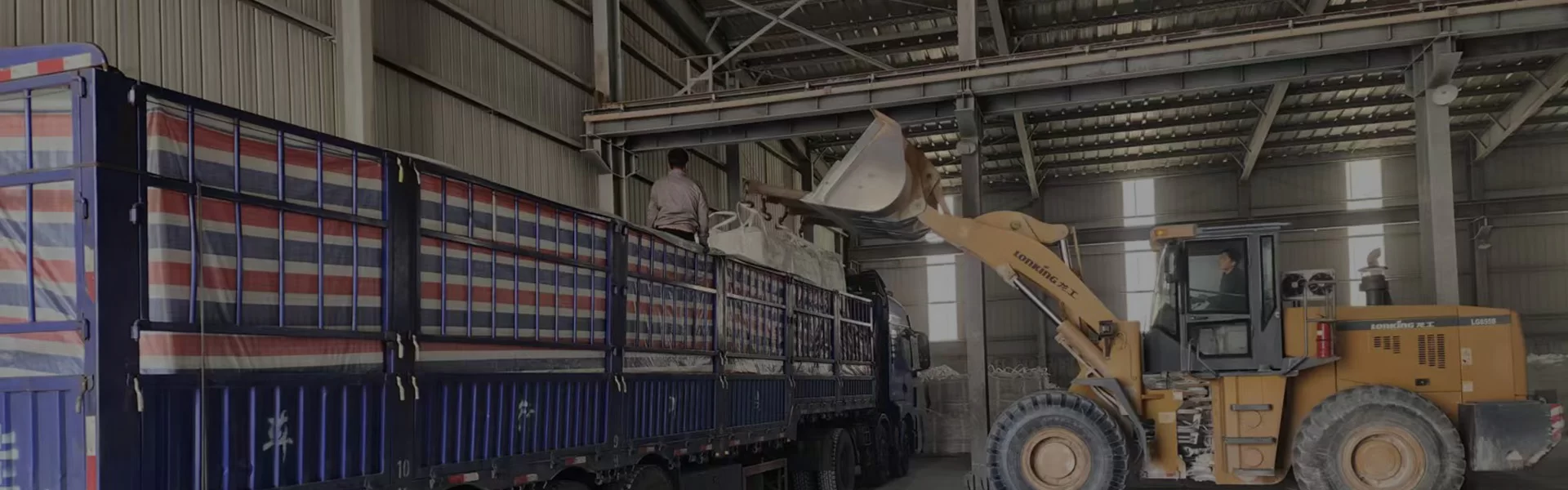
The logistics of mineral powder transportation require specific precautions to prevent contamination and moisture absorption. Shijiazhuang Fengersheng Mining utilizes its strategic location near Tianjin Port to optimize shipping lead times. For plastics-grade talc, moisture control is paramount, as water vapor can cause "silver streaks" or voids in the molded plastic parts, leading to high scrap rates in production.
Our quality control framework integrates sustainability and safety. By adhering to EcoVadis sustainability certifications and REACH compliance, we ensure that our mining and processing operations minimize environmental impact while providing a safe product for global manufacturers. We provide comprehensive MSDS and transportation assessment reports, allowing our clients to integrate the material into their supply chain without regulatory friction.
To support OEM and ODM requirements, we offer tailored particle size customization. Whether a client needs a specific micron range to match an existing formula or requires a particular purity level for a new aerospace composite, our production facility is equipped to handle precision processing to ensure the filler performs exactly as intended in the polymer melt.
Future Trends in Mineral Fillers for Sustainable Polymers
The plastics industry is shifting toward a circular economy, with an increased focus on recycled resins. This transition creates new challenges for filler integration. Recycled plastics often have inconsistent viscosities and impurities; therefore, the use of highly purified talc becomes even more important to stabilize the properties of the recycled composite and bring it closer to the performance of virgin material.
Furthermore, there is a growing trend toward "nano-talc" and surface-treated minerals. By applying organic coatings to the talc surface, manufacturers can improve the interfacial bonding between the inorganic filler and the organic polymer. This result is a composite with significantly higher impact strength and better moisture resistance, expanding the use of talc-filled plastics into more extreme outdoor environments.
As regulatory pressure on PFAS and other additives increases, purified minerals like talc are seen as safe, stable, and sustainable alternatives for achieving functional properties. The industry is moving toward a holistic approach where mineralogy, polymer chemistry, and sustainable mining converge to create the next generation of high-performance, eco-friendly materials.
Frequently Asked Questions About Purified Talc for Plastics
How does purified talc affect the impact strength of plastics?
While talc significantly increases stiffness and flexural modulus, adding too much can reduce the impact strength (making the plastic more brittle). The key is optimizing the loading percentage and ensuring a fine, uniform particle size to minimize stress concentration points within the polymer matrix.
What is the difference between industrial grade and purified talc for plastics?
Industrial grade talc may contain higher levels of iron, quartz, and other minerals. Purified talc undergoes advanced processing to remove these impurities, ensuring high whiteness and chemical stability, which prevents discoloration and degradation during high-temperature injection molding.
Can talc be used in both thermoplastic and thermosetting plastics?
Yes, purified talc is versatile and used in both. In thermoplastics like PP and PE, it improves rigidity and heat resistance. In thermosets, it helps control the exothermic reaction during curing and enhances the overall structural stability of the final part.
How do I prevent talc agglomeration during the blending process?
Agglomeration is usually caused by moisture or poor particle size distribution. Using a purified grade with consistent PSD and ensuring the powder is stored in a dry environment is critical. Some manufacturers also use coupling agents or surface treatments to improve dispersion.
Is REACH certification necessary for importing talc from China?
For companies importing into the European Economic Area (EEA), REACH compliance is mandatory. It ensures the chemical safety of the substance. We provide REACH-compliant materials to ensure our customers avoid legal hurdles and safety risks.
What is the typical loading percentage for talc in polypropylene (PP)?
Typical loading ranges from 10% to 40% by weight, depending on the desired balance between stiffness and impact resistance. For high-stiffness automotive parts, loadings of 30-40% are common, whereas for more flexible parts, 10-20% is used.
Technical References and Industry Sources
- ISO Standards for Mineral Quality Management
- ECHA - REACH Compliance Guidelines for Minerals
- Polymer Composites Research on Talc Reinforcement
- USGS Mineral Commodity Summaries for Talc
For technical data sheets or customized sampling to test in your specific polymer formulation, please contact our engineering team. We provide comprehensive support from material selection to logistics coordination.
Related Technical Insights


