glass microbeads
0%

Table of Contents

To be honest, these days everyone's talking about lightweighting, right? Not just in cars, but in everything. And China cross-border Expanded Vermiculite... well, it's right in the thick of that. It's not new, vermiculite's been around, but the expanded stuff, and getting it *consistently* good quality out of China for international projects… that's where things get interesting. I’ve seen a lot of materials come and go, and this one’s got legs, strangely enough.

Have you noticed how everyone assumes ‘lightweight’ means ‘weak’? That's the biggest hurdle. Engineers are always trying to overbuild, compensate. They look at the spec sheet and think, “Nah, can’t be strong enough.” Then you show them a test, a real-world test, and their tune changes. Speaking of tests, lab tests are good for baseline, sure, but you gotta see how it handles getting rained on, baked in the sun, knocked around on a truck. That’s the real tell.

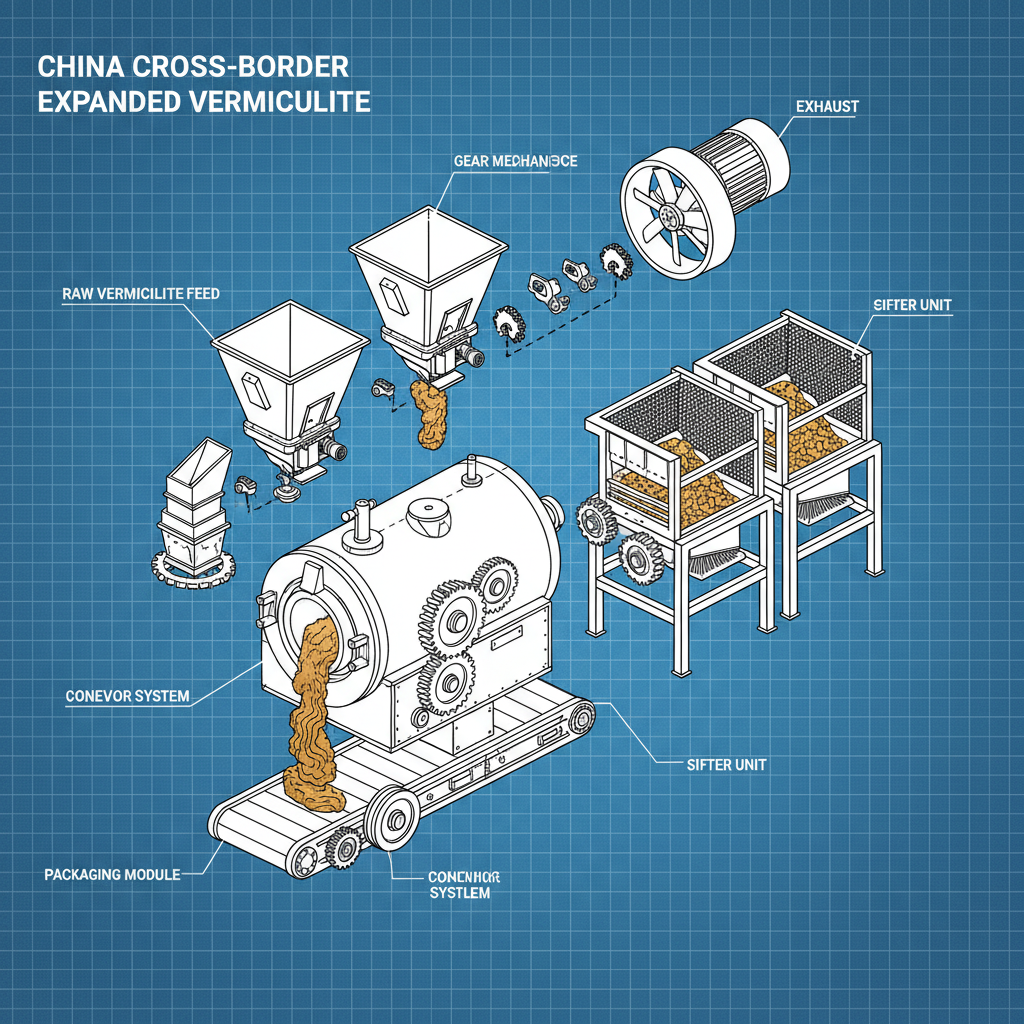
The key isn't *just* the vermiculite itself, it’s the expansion process. There are guys doing it wrong, churning out stuff that’s dusty and brittle. Good stuff? It feels… almost weightless, but firm. Smells kinda earthy, honestly. Not unpleasant. And handling it… well, it's not like dealing with fiberglass. No itchiness. The trick is keeping it dry during transport and storage. Get it wet and it clumps, loses its insulating properties. I encountered this at a factory in Shandong last time; they were storing it outside, under tarps, which just isn’t cutting it.
China cross-border Expanded Vermiculite

Introduction to China cross-border Expanded Vermiculite

China cross-border Expanded Vermiculite

It's popping up everywhere, this stuff. Insulation, fireproofing, lightweight aggregate for concrete… you name it. The Chinese manufacturers have really stepped up their game in the last few years. Quality’s improved dramatically.

But it’s not without its challenges. Getting consistent density, avoiding excessive dust… those are the common complaints. And the logistics, well, shipping anything across borders is a headache these days, let alone a bulky, lightweight material. Anyway, I think the demand will only increase as building codes get stricter and people demand more energy-efficient structures.

Core Properties and Manufacturing Nuances

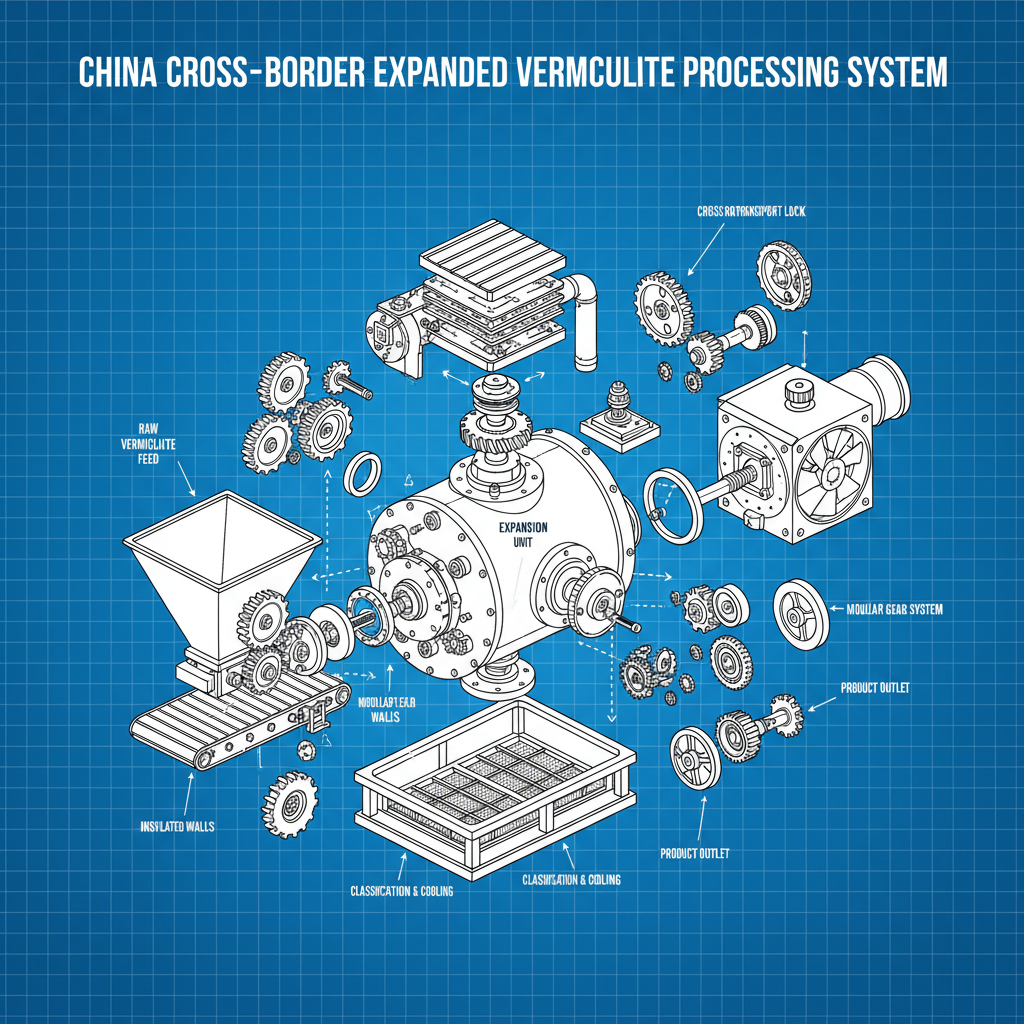
What makes the good stuff good? It's about how they control the expansion. Vermiculite is a mineral mica, right? You heat it up, it expands like crazy. The key is controlling *how* it expands. Too fast, and you get brittle flakes. Too slow, and it’s dense and heavy. I've seen factories using different heating methods - gas fired, electric. Electric seems to give a more consistent product, but it's also more expensive.

Density is huge. You want something in the 60-120 kg/m³ range for most applications. Anything above that, and you're losing the lightweight benefits. Below that, and it gets too fragile. There's also a surprisingly big difference between grades. Some are optimized for thermal insulation, others for acoustic performance, and some are specifically designed for fire resistance.

And it’s not just about the heating process, it’s the raw material sourcing too. Different mines produce different qualities of vermiculite. That's why you'll find such a wide price range.

Material Composition and Handling Characteristics

The composition is fairly simple – it's mostly expanded vermiculite, but they often add a small percentage of binders to improve strength and reduce dust. Some manufacturers are experimenting with different binders - clay, cellulose, even polymers. It's a balancing act; you want strength, but you don't want to compromise the insulating properties or introduce harmful VOCs.

Handling it… look, it's lightweight, so you don’t need heavy lifting gear. But it *is* dusty. You need masks, gloves, eye protection. It gets everywhere. I mean *everywhere*. It's not dangerous, but it's annoying. I always tell my guys, "Treat it like glitter. Once it's out, it's out." And, crucially, keep it dry. Seriously, keep it dry. That's the golden rule.

The better stuff will have low chloride content, which is important for corrosion prevention in construction applications. You'd be surprised how often that gets overlooked. It’s one of those things that doesn't show up immediately, but causes problems down the line.

Performance Metrics and Real-World Testing

Lab tests are fine, but they don’t tell the whole story. We've done thermal conductivity tests, of course. Good stuff gets you down to around 0.06 W/mK. Fire resistance is another big one - it needs to meet the relevant building codes. But here’s where it gets interesting. We started doing impact resistance tests. Dropping weights on it, simulating hail, debris...

That’s when we started seeing real differences between manufacturers. Some stuff just crumbled, while others held up surprisingly well. We also did a small-scale mock-up of a wall section, exposed it to simulated rain and UV radiation for six months, and then tested its thermal performance. That gave us a much better understanding of how it behaves in real-world conditions.

China cross-border Expanded Vermiculite Performance Comparison

Applications Across Diverse Industries

It's not just buildings. I've seen it used in horticulture, as a soil amendment. Apparently, it helps with drainage and aeration. Packaging is another big one – protecting sensitive electronics during shipping.

And fireproofing, of course. Spraying it onto steel structures, creating a protective barrier. I even saw a small company using it to make lightweight insulation panels for refrigerators. It really is surprisingly versatile.

Advantages, Limitations and Customization Options

Advantages? Lightweight, good insulation, fire resistant, relatively inexpensive. But it’s not perfect. It's brittle, dusty, and can absorb moisture. And, let’s be honest, it's not the prettiest material.

Customization? Yeah, you can get it pre-mixed with binders, different densities, different particle sizes. Last month, that small boss in Shenzhen who makes smart home devices insisted on changing the interface to – I mean, *on the vermiculite insulation* – because he thought it would “enhance the user experience.” It was a nightmare. Increased the cost by 20%, and didn't actually improve anything. But hey, he's the boss.

Case Study: Interface Customization and its Consequences

Anyway, I think the biggest thing is understanding its limitations. It’s not a structural material. It’s an *insulating* material. Trying to make it something it's not is just asking for trouble.

We had a project in Malaysia, building some affordable housing. The client wanted to use China cross-border Expanded Vermiculite as a core component in a pre-fabricated wall panel system. Sounded good on paper. But they skimped on the binders, trying to save money, and the panels just fell apart during transport. Total disaster.

You gotta use the right materials, the right processes, and understand what you're trying to achieve.

Summary of Key Considerations for China cross-border Expanded Vermiculite Applications

Application Area Key Performance Metric Potential Failure Mode Mitigation Strategy
Thermal Insulation Thermal Conductivity (W/mK) Moisture Absorption Waterproof Coating/Proper Ventilation
Fireproofing Fire Resistance Rating (Hours) Delamination Under Heat High-Quality Binder, Thick Application
Lightweight Aggregate Density (kg/m³) Crushing Strength Optimal Vermiculite Grade, Polymer Modification
Packaging Material Impact Resistance Brittle Fracture Reinforced Structure, Protective Layer
Horticultural Amendment Water Retention Capacity Dust Generation Pre-Wetted/Coated Material
Acoustic Insulation Sound Transmission Class (STC) Air Leakage Sealed Installation, Dense Packing

FAQS

What’s the biggest mistake people make when using expanded vermiculite?

Honestly? Underestimating the importance of keeping it dry. It's not a waterproof material, and once it gets saturated, it loses a lot of its insulating value. I’ve seen entire projects ruined because someone didn’t bother to properly protect it from the rain during storage or installation. You gotta treat it like a sponge – keep it dry, or it's useless.

How does the quality of China cross-border Expanded Vermiculite compare to other sources?

It's gotten *much* better in the last few years. Used to be a real gamble, but now there are some really good manufacturers over there. You just have to do your due diligence, check their certifications, and maybe even visit their factory if you can. There's still some stuff that’s low quality, full of dust, and inconsistent in density, but the top-tier producers are now competitive with anything from Europe or North America.

Is expanded vermiculite a good choice for exterior applications?

It depends. If it's properly protected from the elements – a good cladding system, for example – then yeah, it can work. But it’s not ideal for direct exposure to rain and sun. It will absorb moisture, and it will degrade over time. You need a robust barrier to prevent water penetration and UV damage. It's better suited for interior applications, where it’s protected from the weather.

What about dust? Is it a health hazard?

It’s not highly toxic, but you don’t want to breathe it in constantly. It can irritate your lungs, and it’s just generally unpleasant. Always wear a dust mask when handling it, and make sure the work area is well-ventilated. A simple N95 mask is usually sufficient. And, of course, good hygiene – wash your hands and face after working with it.

Can you customize the density of the expanded vermiculite?

Absolutely. Most manufacturers can adjust the expansion process to achieve different densities. Lower density for maximum insulation, higher density for better structural support. It’s all about controlling the heating time and temperature. I had a client recently who needed a specific density for a lightweight concrete mix, and the manufacturer was able to dial it in perfectly.

What's the typical lifespan of a structure insulated with expanded vermiculite?

That's a tough one. It depends on a lot of factors – the climate, the quality of the installation, the level of maintenance. If it's properly protected from moisture and physical damage, it can last for decades. But if it gets wet and starts to degrade, you're looking at a much shorter lifespan. Generally speaking, you should expect at least 20-30 years, but it could be significantly longer with proper care.

Conclusion

Ultimately, China cross-border Expanded Vermiculite is a versatile material with a lot of potential. It's lightweight, insulating, fire-resistant, and relatively inexpensive. But it’s not a silver bullet. You need to understand its limitations and use it properly.

Whether it works or not, the worker will know the moment he tightens the screw. You can have all the fancy certifications and lab tests in the world, but if it doesn’t feel right in the field, it’s not going to work. And that’s the truth of it. Visit our website for more information and to discuss your project needs: www.fesmining.com.
Daniel Garcia

Daniel Garcia

Daniel Garcia is a Quality Control Specialist for Shijiazhuang Fengersheng Mining, dedicated to maintaining the highest standards of product quality throughout the supply chain. He oversees the implementation of ISO 9001 quality management procedures and ensures all products meet or exceed customer expectations. Daniel possesses a degree in Chemical Engineering from the University of California, Berkeley and has extensive experience in laboratory testing and analytical techniques. He routinely conducts inspections, analyzes data, and implements corrective actions to optimize product performance. He also coordinates the preparation of MSDS documentation and transportation assessments.
Previous China expanding Sound Insulation Aggregate For Planting A Comprehensive Overview
Next China Fire Resistant Vermiculite Applications and Construction Insights

If you are interested in our products, you can choose to leave your information here, and we will be in touch with you shortly.