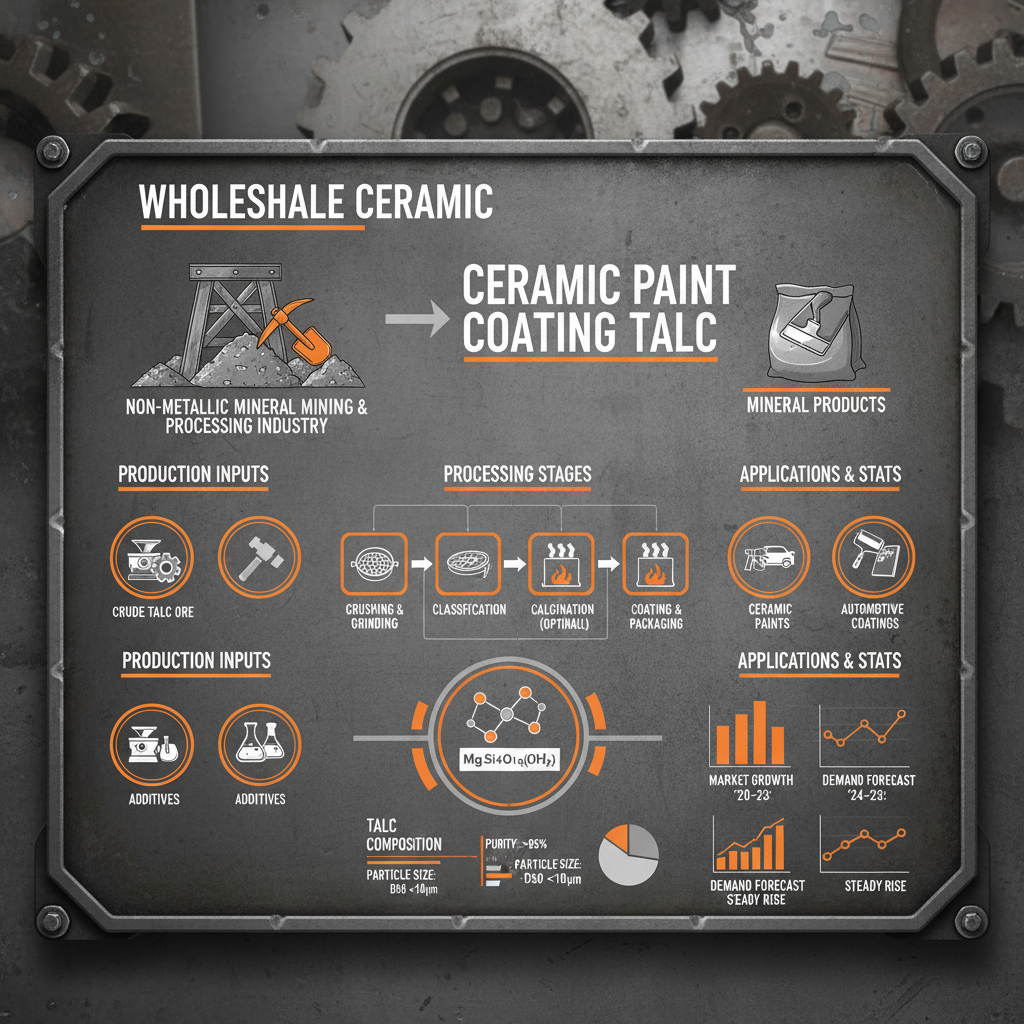
In the sophisticated realm of industrial coatings and ceramics, the demand for high-purity minerals has never been higher. Wholesale ceramic Paint Coating Talc serves as a fundamental functional filler that bridges the gap between raw chemical binders and the final, durable surface finish. By optimizing the rheology and mechanical strength of coatings, this specialized mineral ensures that industrial surfaces can withstand extreme environmental stressors while maintaining an aesthetically pleasing finish.
From a global supply chain perspective, sourcing premium talc in bulk is not merely about procurement but about securing a material that meets strict ISO and ASTM standards for purity and particle size distribution. The chemical stability and lamellar structure of high-grade talc make it indispensable for preventing shrinkage in ceramic glazes and improving the scrub resistance of architectural paints. As industries pivot toward more sustainable and long-lasting materials, the role of meticulously processed talc becomes a cornerstone of product longevity.
Understanding the nuances of Wholesale ceramic Paint Coating Talc allows manufacturers to reduce overall production costs without compromising on quality. By replacing expensive synthetic additives with optimized natural mineral fillers, companies can achieve a synergistic balance of opacity, gloss control, and moisture resistance. This guide explores the technical specifications, global applications, and future innovations driving the talc market in the paint and ceramics sectors.
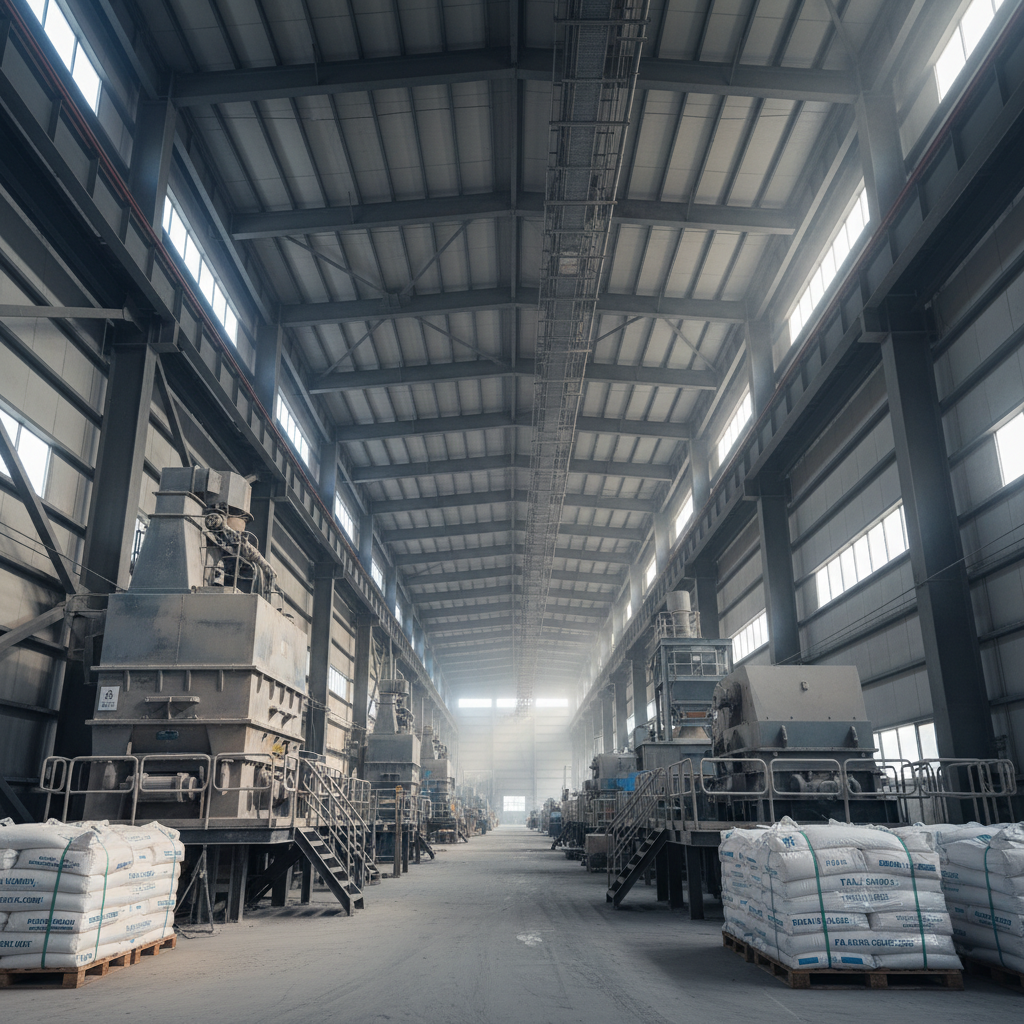
Global Market Dynamics of Wholesale Ceramic Paint Coating Talc
The global trade of Wholesale ceramic Paint Coating Talc is currently shaped by a surge in infrastructure development across Asia-Pacific and the Middle East. According to industrial data aligned with ISO standards, the shift toward "green building" materials has increased the demand for inorganic fillers that can reduce the VOC (Volatile Organic Compound) content in paints. This global transition forces suppliers to enhance the purity of their talc to avoid metallic contaminants that could trigger unwanted chemical reactions in high-performance coatings.
Moreover, the volatility of raw material logistics has made wholesale procurement a strategic necessity for large-scale ceramic manufacturers. By securing long-term contracts for high-brightness talc, factories can stabilize their production costs against market fluctuations. The challenge remains in balancing the high volume of imports with the stringent quality control required for specialized paint coatings, where even a minor deviation in particle size can lead to surface imperfections or "orange peel" effects in the final product.
Technical Definition and Industrial Significance
In technical terms, Wholesale ceramic Paint Coating Talc is a naturally occurring hydrated magnesium silicate with a distinctive plate-like crystalline structure. This "lamellar" morphology is what grants the material its unique ability to overlap within a paint film, creating a physical barrier that protects the substrate from water penetration and corrosive agents. Unlike spherical fillers, these plates act as a microscopic shield, significantly enhancing the moisture resistance of exterior coatings.
Beyond its physical structure, the industrial significance of this mineral lies in its chemical inertness. In the ceramics industry, talc acts as a fluxing agent, lowering the firing temperature of glazes and reducing energy consumption during the vitrification process. This makes it a critical component for manufacturers aiming to lower their carbon footprint while maintaining the structural integrity and brilliance of ceramic tiles and sanitary ware.
Furthermore, when integrated into commercial paint formulations, it improves the "sag resistance" of the coating. This means that when paint is applied to a vertical wall, it stays in place without dripping or running, ensuring a uniform thickness. For the wholesale buyer, this translates to a product that increases the application efficiency for the end-user, thereby adding commercial value to the paint brand.
Core Components for Performance Optimization
The effectiveness of Wholesale ceramic Paint Coating Talc is primarily determined by its particle size distribution (PSD). A narrow PSD ensures that the filler integrates seamlessly with the resin, preventing clumps and ensuring a smooth, professional finish. This is particularly vital for high-gloss coatings where any oversized particle would be visible as a defect.
Another critical factor is the whiteness index (Brightness). For the wholesale ceramic and paint sectors, a high brightness level is non-negotiable, as it ensures that the talc does not alter the intended color of the pigment. High-purity talc reduces the amount of expensive titanium dioxide needed to achieve full opacity, providing a direct cost-saving mechanism for the manufacturer.
Finally, the oil absorption capacity of Wholesale ceramic Paint Coating Talc influences the overall viscosity of the coating. By controlling the amount of binder required to wet the mineral particles, chemists can fine-tune the paint's flow characteristics, ensuring it is neither too thick to apply nor too thin to provide adequate coverage.
Comparative Efficiency of Talc Grade Variants
Not all talc is created equal, and choosing the right grade of Wholesale ceramic Paint Coating Talc depends entirely on the end application. For instance, ultra-fine grades are preferred for precision ceramics and high-end automotive coatings, where surface smoothness is the priority. Conversely, coarser grades are often used in industrial primers where mechanical bonding and bulk filling are more important than a mirror-like finish.
When comparing these variants, manufacturers look at the trade-off between cost and performance. While highly refined talc commands a higher wholesale price, the reduction in resin usage and the increase in coating durability often result in a lower total cost of ownership over the product's lifecycle.
Performance Metrics of Different Talc Grades
Global Applications Across Diverse Industries
The application of Wholesale ceramic Paint Coating Talc extends far beyond simple wall paint. In the heavy-duty industrial sector, it is used in epoxy coatings for steel bridges and marine vessels. The platy structure of the talc creates a "tortuous path" for water and salt ions, effectively slowing down the corrosion process of the metal substrate and extending the maintenance intervals for critical infrastructure.
In the ceramics industry, talc is a key additive for high-temperature porcelain and sanitary ware. It helps in managing the thermal expansion coefficient of the ceramic body, which prevents cracking (crazing) during the cooling phase after firing. This ensures that a bathtub or a ceramic tile remains structurally sound and waterproof, which is essential for residential and commercial hygiene standards.
Long-term Value and Sustainability Benefits
From a financial perspective, investing in high-quality Wholesale ceramic Paint Coating Talc offers significant long-term value. By enhancing the durability of the final coating, the frequency of repainting is reduced, which lowers the lifetime cost for the end consumer. This reliability builds brand trust and loyalty, as the coatings are seen as a premium, long-lasting solution rather than a temporary fix.
Sustainability is another major driver. Natural talc is an abundant mineral that, when sourced responsibly, provides a low-carbon alternative to synthetic fillers. Its ability to reduce the quantity of resin—often a petroleum-based product—makes the entire paint formulation more eco-friendly. The reduction in energy required for ceramic firing, thanks to talc's fluxing properties, further aligns with global ESG (Environmental, Social, and Governance) goals.
Furthermore, the use of optimized talc contributes to the "circular economy" by increasing the lifespan of the objects it protects. Whether it is a coated industrial pipe or a ceramic floor tile, the extended utility of the product means fewer resources are spent on replacement and disposal, creating a positive social and environmental impact.
Future Trends in Mineral Coating Technology
The future of Wholesale ceramic Paint Coating Talc is being shaped by surface modification technologies. Researchers are now developing "functionalized talc," where the surface of the mineral plates is chemically treated to bond more strongly with specific polymers. This allows for even thinner coating layers with superior strength, potentially revolutionizing the aerospace and automotive industries.
Additionally, the integration of digital transformation in mining and processing means that talc can now be produced with "precision grading." Using AI-driven sorting and milling, suppliers can provide talc with a customized particle distribution tailored to a client's specific formula, eliminating the waste associated with over-processing and ensuring a perfect match every time.
As the world moves toward smart cities, we expect to see talc used in conductive coatings and heat-reflective paints. By combining Wholesale ceramic Paint Coating Talc with nano-materials, the industry is moving toward "intelligent surfaces" that can regulate temperature or signal structural fatigue, blending traditional mineralogy with futuristic materials science.
Comparative Analysis of Talc Application Performance
| Application Sector |
Key Performance Metric |
Impact of Talc Integration |
Value Score (1-10) |
| Architectural Paint |
Scrub Resistance |
Increased hardness & durability |
9 |
| Ceramic Glazes |
Firing Temperature |
Reduced energy consumption |
8 |
| Marine Coatings |
Water Permeability |
Superior barrier protection |
10 |
| Automotive Primers |
Surface Smoothness |
Minimized orange-peel effect |
9 |
| Industrial Epoxy |
Sag Resistance |
Improved vertical application |
7 |
| Sanitary Ceramics |
Thermal Stability |
Prevented glaze crazing |
8 |
FAQS
Buying in wholesale quantities ensures consistent chemical purity and particle size distribution across large batches. For industrial manufacturers, this consistency is critical to avoid batch-to-batch variation in paint color or ceramic strength. Additionally, wholesale sourcing significantly reduces the cost per ton, allowing companies to optimize their margins while maintaining high-performance standards.
Due to its lamellar (plate-like) structure, talc particles align themselves parallel to the substrate during the drying process. This creates a "tortuous path" or a physical labyrinth that makes it much harder for water molecules and corrosive ions to penetrate through the paint film to reach the metal or ceramic base, effectively waterproofing the surface.
While it is highly versatile, the grade of talc must match the paint type. For example, water-based architectural paints require a different particle size than solvent-based industrial epoxies. Most wholesale suppliers provide specific grades (ultra-fine vs. standard) to ensure compatibility with different resin systems and desired finish levels.
Yes, absolutely. In the ceramics and paint industries, purity is measured by the whiteness index. Low-purity talc contains iron or other mineral oxides that can cause yellowing or spotting in white glazes and light-colored paints. High-brightness wholesale talc ensures the final color is vivid and accurate without requiring excessive whitening agents.
Yes, natural talc is an inorganic mineral that is generally more sustainable than petroleum-derived synthetic fillers. When processed using modern, low-emission mining techniques, it helps reduce the overall carbon footprint of the coating. Furthermore, its ability to lower ceramic firing temperatures directly reduces CO2 emissions during production.
Bulk talc should be stored in a cool, dry environment, away from direct moisture. Since it is a mineral powder, humidity can cause agglomeration (clumping), which can affect the flow during the mixing process. Using moisture-proof jumbo bags and ensuring a dry warehouse floor are the best practices for wholesale storage.
Conclusion
In summary, Wholesale ceramic Paint Coating Talc is far more than a simple filler; it is a strategic industrial component that enhances durability, reduces costs, and improves the aesthetic quality of coatings and ceramics. By leveraging its unique lamellar structure and chemical stability, manufacturers can create products that are not only more resistant to environmental decay but also more sustainable in their production.
As we look toward the future, the integration of precision mineralogy and surface chemistry will continue to push the boundaries of what protective coatings can achieve. For companies seeking to maintain a competitive edge in the global market, sourcing high-purity, consistent talc is an essential step toward innovation and operational excellence. Visit our website for premium sourcing solutions: www.fesmining.com