glass microbeads
0%

Table of Contents

Honestly, the whole hollow glass bead scene… it’s been heating up. Not just here in China, but everywhere. Everyone’s chasing lighter weight, better insulation, that sort of thing. It’s not a new tech, mind you, been around for ages, but the demand, especially from the automotive and construction industries, is really pushing things forward. A lot of folks are also looking at it for buoyancy applications, weirdly enough.

You see a lot of these 'innovations' though, and you just know they'll run into trouble. Like, everyone wants higher strength beads, right? But they forget that increasing the silica content too much makes them brittle. I saw a batch fail spectacularly at a factory in Shandong last year – looked like someone had dropped a bag of sugar. Messy.

And the whole thing hinges on the raw materials. It's not just about getting silica, it's about which silica. The stuff from some quarries has these trace impurities... they smell faintly of sulfur, believe it or not, and they completely screw with the firing process. You need good, clean silica, and you need a consistent supply. Then there’s the soda ash, the limestone, the alumina – all critical. We ended up switching suppliers for the alumina just to get a whiter final product. The color matters, apparently.
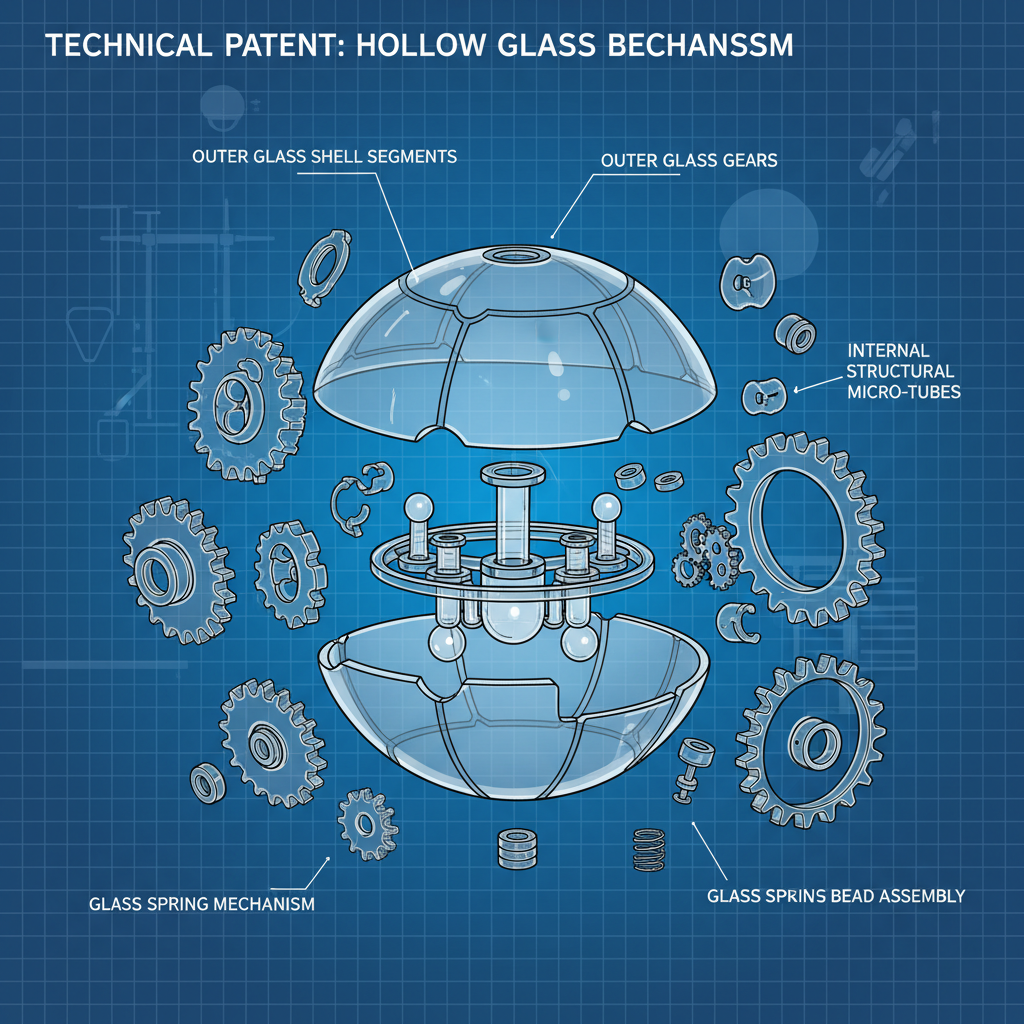
China hollow Glass Beads

The Current Landscape of China Hollow Glass Beads

China hollow Glass Beads

Have you noticed how everything's going lighter? Automotive, aerospace, even packaging. That's where hollow glass beads come in. China’s become a major player, especially for the lower to mid-range stuff. But, and it’s a big but, quality control can be… variable. There are a lot of small producers popping up, chasing the quick buck, and their beads just don’t hold up. It’s a race to the bottom sometimes.

We're seeing more demand for specialized beads too, like those with specific surface treatments for better compatibility with different polymers. It's a niche market, but it’s growing. And the environmental pressures are increasing, so people are looking for more sustainable production methods. It's a whole tangle of factors, honestly.

Common Design Pitfalls in Hollow Glass Bead Production

Strangely enough, the biggest issue I see isn’t usually the chemistry, it’s the consistency of the particle size. If you’ve got too much variation, you get packing issues, reduced performance… a real headache. People focus on the average diameter, but the distribution is what kills you. Another trap? Trying to get too aggressive with the expansion rate. Push it too far, and you end up with a lot of cracked beads.

And don't even get me started on the attempts to make super-high-density beads. It sounds good in theory, but it usually means sacrificing strength. There's a sweet spot, and finding it takes a lot of trial and error. I encountered this at a factory in Jiangsu last time – they were boasting about their high-density beads, and when I asked to see the burst pressure testing, they got real quiet.

Finally, people often underestimate the importance of surface cleaning. Even tiny amounts of residue can affect adhesion and overall performance. It's a tedious process, but it's crucial.

Raw Material Considerations: It’s More Than Just Silica

To be honest, silica is just the starting point. The source matters hugely. Beach sand? Forget about it. Too much salt, too many impurities. You need a good quality quartz sand, and even then, you have to screen it, wash it, and treat it.

The soda ash... that’s another beast. Different grades, different impurity profiles. Some soda ash smells almost metallic, which is a bad sign. And the limestone – it’s gotta be pure calcium carbonate, no magnesium. Magnesium messes with the viscosity during firing. You wouldn’t believe the amount of time we spend analyzing these materials.

And then there’s the alumina. It acts as a stabilizer, helps prevent devitrification during firing. But getting the right particle size alumina is critical. Too coarse, and it creates defects. Too fine, and it makes the mixture too viscous. Anyway, I think the whole thing is far more complicated than people give it credit for.

Real-World Testing: Beyond the Lab

Lab tests are fine, but they don't tell the whole story. You need to see how these beads perform in real-world conditions. We do burst pressure testing, of course, but we also do impact resistance tests – dropping weights onto composite panels filled with the beads. And thermal shock testing – cycling the materials through extreme temperatures.

But the best tests are the ones where we just give the beads to our customers and let them abuse them. Seriously. We had one customer using them in a marine application, and they just subjected them to constant saltwater exposure, UV radiation, and physical abrasion. That’s when you really find out what works and what doesn't.

China Hollow Glass Beads Performance Metrics

Actual User Applications: Sometimes Surprising

People use them in ways you wouldn't expect. Obviously, there’s the composite industry – boat hulls, car parts, wind turbine blades. But we’ve also had customers using them as fillers in cosmetics, to reduce weight and improve texture. And some guys are mixing them into concrete to make lightweight structural panels.

I even heard about a company using them to create a sort of ‘artificial snow’ for ski resorts. Apparently, it’s cheaper than making real snow, and it lasts longer. I haven't seen it myself, but… well, people are creative.

Advantages, Disadvantages, and the Balancing Act

The biggest advantage, obviously, is the weight reduction. And the improved insulation properties. But they're brittle, let’s be real. And they’re not cheap. You’re paying a premium for that weight savings. It's always a trade-off.

And getting them to disperse evenly in a matrix? That can be a real pain. You need the right surface treatment, the right mixing process... it's not as simple as just dumping them in. There are some clever folks working on self-dispersing beads, but it’s still early days.

Customization and Specific Use Cases

Customization is huge. Last month, that small boss in Shenzhen who makes smart home devices insisted on changing the interface to , and the result was a complete disaster. He wanted the beads to be coated with a conductive polymer for EMI shielding, which is doable, but it drastically reduced their buoyancy. He didn't think it through.

We've also done a lot of work on surface modification, tailoring the beads for specific resin systems. Sometimes it’s just about adding a silane coupling agent, other times it’s more complex, involving plasma treatment or chemical grafting. And color matching – people get very particular about color.

One customer wanted purple beads for a promotional campaign. Purple! It cost a fortune to get the color consistent, but they were happy. It’s a weird world.

Summary of Key Characteristics of China Hollow Glass Beads

Characteristic Typical Value Range Impact on Application Control Methods
True Density 0.2 – 0.6 g/cm³ Determines weight reduction potential Silica composition, expansion process
Particle Size 10 – 150 µm Affects packing density, surface finish Classification, milling
Crush Strength 2 – 10 MPa Indicates resistance to mechanical stress Silica quality, expansion control
Water Absorption < 1% Influences durability in wet environments Surface treatment, sealing
Surface Treatment Varies (Silane, Stearic Acid) Improves compatibility with matrices Chemical coating, plasma treatment
pH Value 6.5 – 7.5 Impacts resin curing and stability Raw material selection, washing

FAQS

What are the primary factors influencing the cost of China hollow glass beads?

The cost of China hollow glass beads is largely determined by raw material prices (silica, soda ash), production complexity, particle size distribution requirements, and order volume. Specialized surface treatments and stringent quality control also add to the price. Demand fluctuations and shipping costs play a role as well, honestly. Getting a stable price takes work.

How do I ensure the quality of hollow glass beads sourced from China?

Due diligence is key. Request detailed specifications, including particle size distribution, crush strength, and water absorption. Ask for samples and conduct your own testing. Visit the factory if possible, or use a reputable third-party inspection service. Don't just rely on the supplier's claims – verify everything.

What are the typical lead times for ordering hollow glass beads from China?

Lead times can vary significantly depending on the order size, availability of materials, and current production capacity. Generally, expect 4-8 weeks for standard orders, but it can be longer for customized products. Always factor in shipping time, which can add another 2-4 weeks depending on your location. Plan ahead!

Can hollow glass beads be used in applications requiring high temperature resistance?

While glass itself has good temperature resistance, the thermal shock resistance of hollow glass beads is a concern. Rapid temperature changes can cause cracking. Specialized formulations and surface treatments can improve thermal shock resistance, but it’s still a limiting factor in high-temperature applications. It depends on the grade, and the specifics of the application.

Are there any environmental concerns related to the production of hollow glass beads?

The production process can generate dust and wastewater. Reputable manufacturers implement dust control measures and wastewater treatment systems to minimize environmental impact. Look for suppliers with environmental certifications and a commitment to sustainable practices. It’s a growing concern, and a good supplier will be proactive about it.

What is the shelf life of hollow glass beads?

If stored properly in a dry, sealed container, hollow glass beads have a very long shelf life – essentially indefinite. However, exposure to moisture can lead to caking and reduced performance. Proper storage is crucial to maintain quality and prevent waste.

Conclusion

So, yeah, China hollow glass beads... they’re a complicated business. It’s not just about the beads themselves; it’s about the raw materials, the manufacturing process, the quality control, and understanding how they'll actually be used. There’s a lot of hype out there, and a lot of poor-quality products. But when you find a good supplier, and you understand the nuances, they can be a real game-changer.

Ultimately, whether this thing works or not, the worker will know the moment he tightens the screw. If it feels right, if it performs as expected, then you’ve got a winner. If it crumbles, well… you go back to the drawing board. Visit our website at China hollow Glass Beads to learn more and get a quote.
Robert Chen

Robert Chen

Robert Chen is the Logistics & Compliance Coordinator for Fengersheng Mining, specializing in North American distribution. He ensures all products meet stringent US regulations, including REACH compliance and safety standards. Robert has a background in international trade and supply chain management, holding a certification in logistics from the American Society of Transportation & Logistics. Prior to Fengersheng, he worked with a major shipping company, gaining valuable experience in import/export procedures. He plays a crucial role in coordinating shipments from Tianjin Port and ensuring timely delivery to customers across the continent. Robert’s attention to detail and proactive approach are vital for smooth operations.
Previous China Barium Sulfate Used for Radiation Protection Materials Applications and Handling
Next China glass Microspheres For Insulating Paints Properties and Application Considerations

If you are interested in our products, you can choose to leave your information here, and we will be in touch with you shortly.