In the high-stakes world of industrial safety and traffic management, visibility is not just a feature—it is a lifeline. Manufacturers and procurement officers often face the challenge of sourcing raw materials that maintain luminosity and durability under harsh environmental conditions. The inconsistency of reflective glass beads or mineral pigments can lead to reflective Safety Apparel that fails to meet international safety compliance after just a few wash cycles, compromising user safety and brand reputation.
Shijiazhuang Fengersheng Mining Co., Ltd. addresses this critical supply chain gap by providing high-grade mineral additives and reflective components rooted in over 40 years of material science expertise. Established in 1982, we have evolved from a local mica factory into a global material powerhouse, ensuring that the foundational elements of your safety gear possess superior chemical stability and heat resistance. With an annual production capacity exceeding 200,000 tons, we offer the scale and reliability required to support mass production of premium safety garments.
By integrating our advanced mineral solutions—ranging from high-refractive glass bead precursors to durable titanium dioxide pigments—you ensure that the end product delivers exceptional brightness and longevity. We empower manufacturers to produce reflective Safety Apparel that stands out in the dark and stands up to the elements.
The performance of safety gear is dictated by the microscopic quality of its constituent materials. To achieve high visibility, the raw materials used in the production of reflective tapes and fabrics must possess specific optical and physical properties. At FES Mining, we leverage our comprehensive production system—covering mining to processing—to strictly control the purity and particle distribution of our minerals. This ensures that the components used in reflective Safety Apparel meet rigorous international testing standards.
Our commitment to quality is evidenced by our export dominance across 120 countries, serving markets with stringent safety requirements like North America and Europe. Below is a breakdown of how our material engineering translates to superior safety application performance:
| Performance Metric | Industry Significance | Our Engineering Standard | Advantage |
|---|---|---|---|
| Chemical Resistance | Ensures reflectivity survives industrial washing and harsh weather. | High-stability mineral composition (Mica/Silica based). | Extends the functional lifespan of reflective Safety Apparel. |
| Thermal Stability | Prevents degradation of reflective elements during high-heat manufacturing. | Heat resistance proven in drilling and foundry applications. | Maintains material integrity during textile coating processes. |
| Particle Uniformity | Critical for consistent retro-reflection angles. | Precision processing system (International Standard Certs). | Guarantees uniform luminosity across the entire garment surface. |
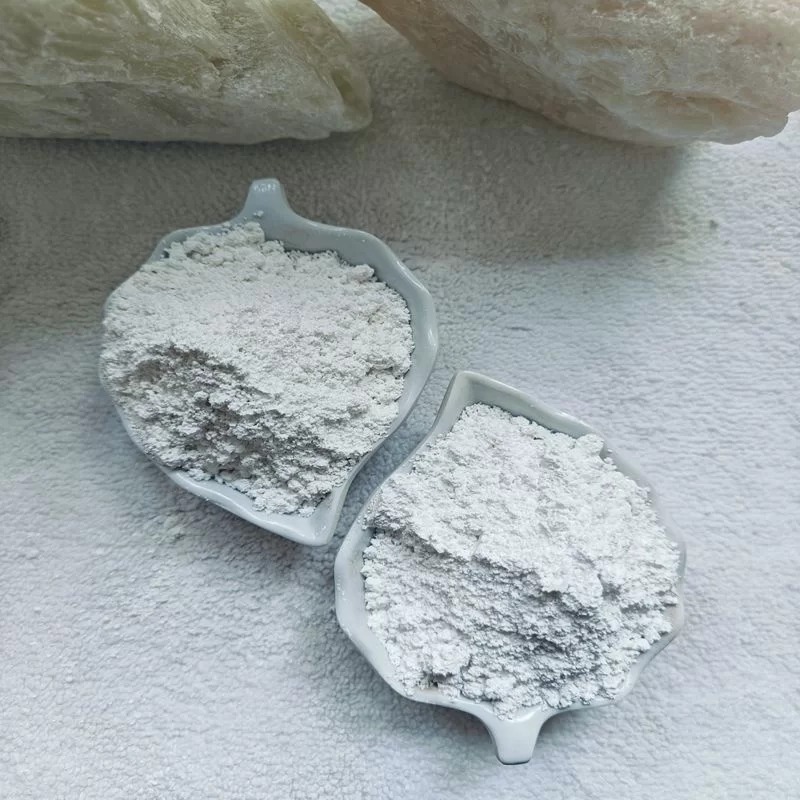
| Opacity & Whiteness | Enhances contrast for daytime visibility. | Premium Titanium Dioxide & Calcined Kaolin grades. | Provides a brighter base for high-contrast safety gear. |
Strategic sourcing is the cornerstone of profitability in the safety equipment market. Relying on inconsistent raw material suppliers can lead to batch rejections and compliance failures, which destroy profit margins. By partnering with a vertically integrated supplier like FES Mining, businesses secure a competitive edge through material consistency and supply chain resilience. Our long-term partnerships with giants like CNPC and Sinopec validate our ability to deliver value at scale, ensuring your investment in reflective Safety Apparel manufacturing yields higher returns.
Integrating superior mineral components does more than just meet basic standards; it creates a premium product tier. Durable materials reduce the frequency of replacement for end-users, building brand loyalty, while our massive capacity (80,000+ tons annual export) ensures you are insulated from market shortages. The chart below illustrates the comparative longevity of safety materials sourced from high-grade mineral processing versus standard market alternatives.
Related products
Top Selling Products


If you are interested in our products, you can choose to leave your information here, and we will be in touch with you shortly.