
Hollow Glass Microspheres Cost Comparison for Industrial Composites
Total cost of ownership in industrial composites is primarily determined by volumetric coverage rather than purchased raw mass. Procurement evaluations frequently miscalculate expenses by comparing fillers strictly on a price-per-kilogram basis, ignoring the crucial role of bulk volume displacement per cubic meter in formulation economics.
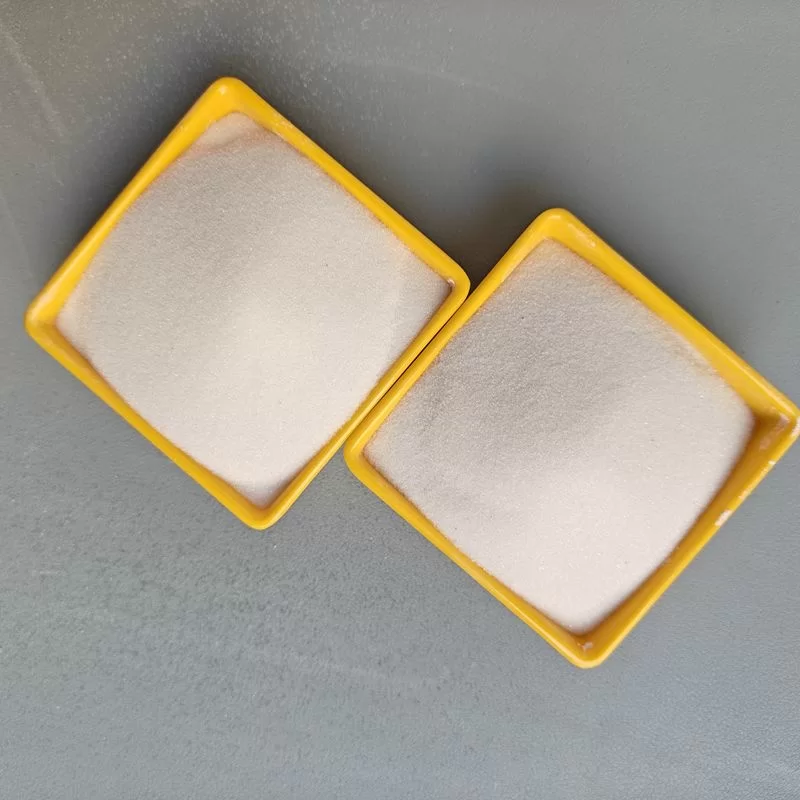
Alkali-lime borosilicate hollow glass microspheres serve as a strategic alternative to traditional solid mineral fillers. Sourcing strategies shift when engineering leads account for particle sizes ranging between 2 and 130 µm, altering density profiles and final part weights across manufacturing lines.
Evaluating Raw Material Costs Through Bulk Volume Displacement
Bulk Volume Versus Mass in Procurement Decisions
Procurement teams managing industrial composites must evaluate raw material expenses based on volumetric coverage ratios rather than weight per kilogram. Purchasing strategies relying exclusively on mass-based unit pricing frequently miscalculate true material efficiency across manufacturing lines. When low-density fillers displace heavier components within an epoxy, rubber, or cement matrix, spatial occupancy dictates the actual economic value.
Structural air cavities in lightweight powders expand total volume without adding proportional mass.
Consequently, purchasing evaluations calculate expenditures based on occupied space rather than raw mass.
Volumetric Efficiency Factors
Low-density filler additions alter volumetric coverage ratios and overall raw material efficiency for engineering leads. Formulators incorporating Alkali-lime Borosilicate Glass achieve greater spatial output per kilogram, effectively reducing the active binder mass required to fill a specific mold for aerospace composites or automotive lightweighting. Industrial composite manufacturers typically procure filler materials based on spatial displacement rather than mass to manage material expenses effectively across large-scale production runs.
Supply chain managers review bulk shipment parameters to ensure that voluminous powders are accounted for accurately during transport and storage planning phases.
Accounting for High-Shear Processing Survivability and Attrition
Processing Survivability Under Mechanical Stress
Engineering teams assessing attrition rates in materials sized 2 - 130 µm must monitor mechanical breakage risks during intensive twin-screw compounding and high-pressure pumping operations. Rotating machinery elements generate high shear stresses that can fracture weaker micro-shells, diminishing the functional additive volume before mixtures reach final molds.
Active mass calculations must account for these handling and processing losses to prevent underfilling during large-scale manufacturing runs.
Handling Attrition and Active Mass Retention
When operating conditions involve aggressive pumping or high-torque compounding, compounders incorporate typical factory loss margins to determine the correct baseline mass. Exact attrition ranges vary depending on equipment geometry and operational parameters across different factory floors, requiring careful adjustment during pilot runs.
Documentation detailing crushing strength metrics and recommended processing limits is available from the supplier.
Comparative Parameter Profile of Alkali-Lime Borosilicate Glass
Material Parameter Profile and Density Boundaries
Procuring industrial composites requires comparing exact particulate dimensions and application scopes to determine compatibility with existing binder systems. The alkali-lime borosilicate glass formulation provides controlled particle distributions designed for industrial matrices.
Engineered to withstand processing environments without destroying spherical integrity, the physical architecture accommodates multiple composite bases. Engineers evaluate these metrics when balancing formulation weight against structural requirements.
Application Scope and Material Parameters
| material | size | application | industry |
|---|---|---|---|
| Alkali-lime Borosilicate Glass | 2 - 130 µm | aerospace composites, automotive lightweighting, marine anti-corrosion coatings, oilfield cementing, energy-saving construction materials, epoxy, rubber, and cement matrices | Industrial composites |
When formulation designs require specific matrix integration, particles interact predictably across diverse binding systems. Viscosity modifications and density reductions depend directly on the chosen volumetric loading percentage applied during mixing phases.
Factoring Downstream Logistics Savings on Lightweight End-Products
Transport Efficiency and Density Factors
Net functional payloads per cubic meter of cargo space increase when low-density fillers displace heavier conventional components in industrial shipments. Transport expenditures decline proportionally for long-distance deliveries.
When destination ports require extensive regional trucking legs, reduced specific gravity lowers overall fuel surcharges. Delivery schedules experience fewer weight-limit constraints.
Trial Run Parameters
Formulation engineers execute pilot-scale trial runs to validate mechanical stability before transitioning existing production lines. Compounders test viscosity variations under real processing conditions.
- Measuring handling efficiency improvements during crane lifting and manual on-site positioning
- Monitoring batch consistency across varying binder viscosities during pilot trials

Aerospace composites and automotive lightweighting initiatives benefit directly from these bulk density reductions. Payback periods depend heavily on destination port logistics and regional fuel pricing variables.
Optimizing International Freight Economics and Minimum Order Quantities
Container Space Allocation and Logistics Execution
When consignments reach full cubic capacity before the weight limit, sea freight economics improve significantly for low-density particulate consignments. Managing international shipping overhead requires coordinating minimum order quantities directly with standard dry van dimensions.

Pallet Configuration and Commercial Purchasing Terms
Standard commercial purchasing agreements rely on order thresholds tied to full pallet or container loads to mitigate empty space penalties. Supply chain planners review transit density metrics to keep voluminous alkali-lime borosilicate hollow glass microspheres aligned with regional delivery capabilities.
- Full pallet configuration reduces unit transport overhead for high-volume import orders.
- Container load optimization depends directly on port destination requirements and local handling constraints.
- Strategic packing schedules prevent empty space penalties charged by international carriers.
Long-Term Supply Chain Stability
Coordinating delivery schedules with regional distributors helps stabilize international shipping expenditures across multi-destination supply chains. Total financial impact is governed by specific route distances and final destination customs tariffs, requiring careful alignment with the supplier regarding exact destination port rules.
Verifying Compliance and Certification Requirements for Export
Verifying Regulatory Documentation and Export Requirements
The specific type of compliance documentation and verification pathways required for international shipments vary depending on the destination port and application scenario. Regulatory alignment depends heavily on regional import policies, which change according to whether the materials enter aerospace composites, automotive lightweighting, marine anti-corrosion coatings, oilfield cementing, energy-saving construction materials, or epoxy, rubber, and cement matrices.
Navigating technical compliance requires establishing direct communication channels to evaluate available paperwork for specific logistical routes. Buyers should list their specific requirements during the inquiry stage so the supplier can provide the corresponding document checklist.
Establishing Factory-Direct Documentation Channels
- Direct communication with factory quality assurance departments secures traceable compliance files.
- Procurement managers audit incoming technical dossiers against internal raw material specifications.
- Designated engineering leads review batch-specific test reports before approving new formulation inputs.
Certification availability is to be confirmed directly with the supplier without asserting verified compliance.
Frequently Asked Questions
Purchasing evaluations compare expenses by measuring volumetric coverage per cubic meter rather than raw mass per kilogram. When low-density fillers occupy spatial volume within polymer or cement systems, overall resin binder demand shifts according to the spatial displacement ratio achieved during mixing.
- Calculations factor in spatial occupancy rather than purchased weight.
- Binder consumption adjusts relative to spatial filler volume.
Intensive twin-screw compounding and high-pressure pumping subject hollow micro-shells to mechanical shear stresses. Compounders account for processing attrition by evaluating active material survival rates under specific equipment configurations and mixing speeds.
- Shear stress levels vary depending on screw speed and equipment geometry.
- Attrition rates depend on processing parameters and wall thickness characteristics.
Compounders conduct pilot-scale trial runs on manufacturing lines to measure actual filler dispersion, resin demand, and mechanical performance before approving large-scale raw material substitutions.
- Trial batches verify volumetric displacement under real production conditions.
- Formulation adjustments depend on pilot-scale test outcomes.
The material integrates into matrices across multiple industrial sectors requiring density reduction or improved durability.
- Applications include aerospace composites and automotive lightweighting.
- Additional uses cover marine anti-corrosion coatings and oilfield cementing.
Procuring raw materials based on spatial coverage allows manufacturing plants to forecast binder and filler quantities accurately across large-scale production runs.
- Spatial displacement metrics replace simple mass-based budgeting.
- Procurement budgets depend on the targeted volumetric fill ratio.
Conclusion
R&D teams preparing pilot-scale trials must assemble current volumetric loading metrics before requesting physical test quantities from the supply chain.
Evaluation protocols depend on the specific processing equipment parameters and targeted performance thresholds.
Technical data sheets, sample delivery schedules, and documentation checklists are available upon direct request to the supplier.